
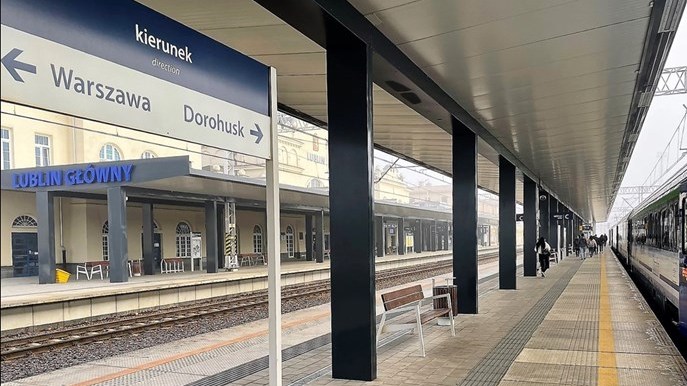
Polish Rail Operator PKP Intercity Announces New Warsaw-Kyiv Route via Dorohusk Border Crossing
Poland’s state-owned railway operator PKP Intercity has initiated the approval process for a new international train service connecting Warsaw and Kyiv, marking another significant step in strengthening transportation links between Poland and Ukraine. The announcement comes as both nations continue to deepen their bilateral cooperation, particularly in the context of Ukraine’s ongoing conflict with Russia and its aspirations for European integration. This new route represents not only a practical transportation solution but also a symbolic gesture of solidarity between the two neighboring countries.
The proposed service will operate through the Dorohusk-Izov border crossing, one of the key railway checkpoints between Poland and Ukraine. This border point, located in the Lublin Voivodeship of eastern Poland, has historically served as an important transit hub for both passenger and freight traffic between the two countries. The choice of this crossing is strategic, as it provides a relatively direct route from Warsaw to Kyiv while utilizing existing railway infrastructure that has been maintained and upgraded over recent years.
The development of this new rail connection addresses a growing demand for reliable and efficient transportation options between the two capitals. Since the beginning of the full-scale Russian invasion of Ukraine in February 2022, Poland has become the primary gateway for millions of Ukrainian refugees and has served as a crucial logistics hub for humanitarian aid. The existing rail connections, including services operated by Ukrainian Railways (Ukrzaliznytsia), have been operating at capacity, making additional routes essential for meeting passenger demand. Currently, trains between Poland and Ukraine must navigate the challenge of different rail gauges, as Poland uses the European standard gauge of 1,435 millimeters while Ukraine operates on the broader Soviet-era gauge of 1,520 millimeters.
PKP Intercity, which is Poland’s largest long-distance rail operator, has been expanding its international services in recent years as part of a broader modernization strategy. The company operates a fleet of modern rolling stock, including Pendolino high-speed trains and comfortable intercity coaches that meet European standards for passenger comfort and safety. For the Warsaw-Kyiv route, the operator will need to coordinate closely with Ukrzaliznytsia to ensure seamless border procedures and potentially arrange for gauge-changing equipment or transfer systems at the border. Such technical challenges have been addressed on other cross-border routes, including the existing Przemyśl-Kyiv connection that has seen increased traffic since 2022.
The historical context of Polish-Ukrainian railway cooperation dates back decades, though the relationship has evolved significantly in recent years. During the Soviet era, rail connections between Poland and Ukraine were primarily designed to serve the needs of the communist bloc’s integrated transportation network. After Ukraine gained independence in 1991, these connections were maintained but often underutilized due to economic factors and complex border procedures. The transformation began accelerating after Ukraine’s 2014 Euromaidan revolution and has intensified dramatically since 2022, with both governments recognizing the strategic importance of robust transportation links.
Experts in European transportation policy view this announcement as part of a larger trend toward integrating Ukraine into the European rail network. The European Union has been actively supporting projects aimed at connecting Ukrainian infrastructure with EU standards, including the extension of the Trans-European Transport Network (TEN-T) corridors into Ukraine. Railway analysts suggest that increased passenger services between Poland and Ukraine could eventually pave the way for more ambitious projects, such as high-speed rail connections and the gradual conversion of Ukrainian railways to European standard gauge. Such transformations, while costly and time-consuming, would eliminate the current technical barriers that complicate cross-border rail travel.
The Warsaw-Kyiv route is expected to serve multiple purposes beyond basic transportation. Business travelers, diplomatic personnel, students, and families separated by the ongoing conflict will all benefit from additional rail capacity. The journey time and specific schedule for the new service have not yet been disclosed, though similar routes typically take between 12 and 16 hours depending on border procedures and the specific path taken. As PKP Intercity moves through the regulatory approval process, further details regarding ticket prices, frequency of service, and onboard amenities are expected to be announced. This initiative underscores the deepening partnership between Poland and Ukraine and demonstrates how transportation infrastructure can serve as a foundation for broader political and economic cooperation.