
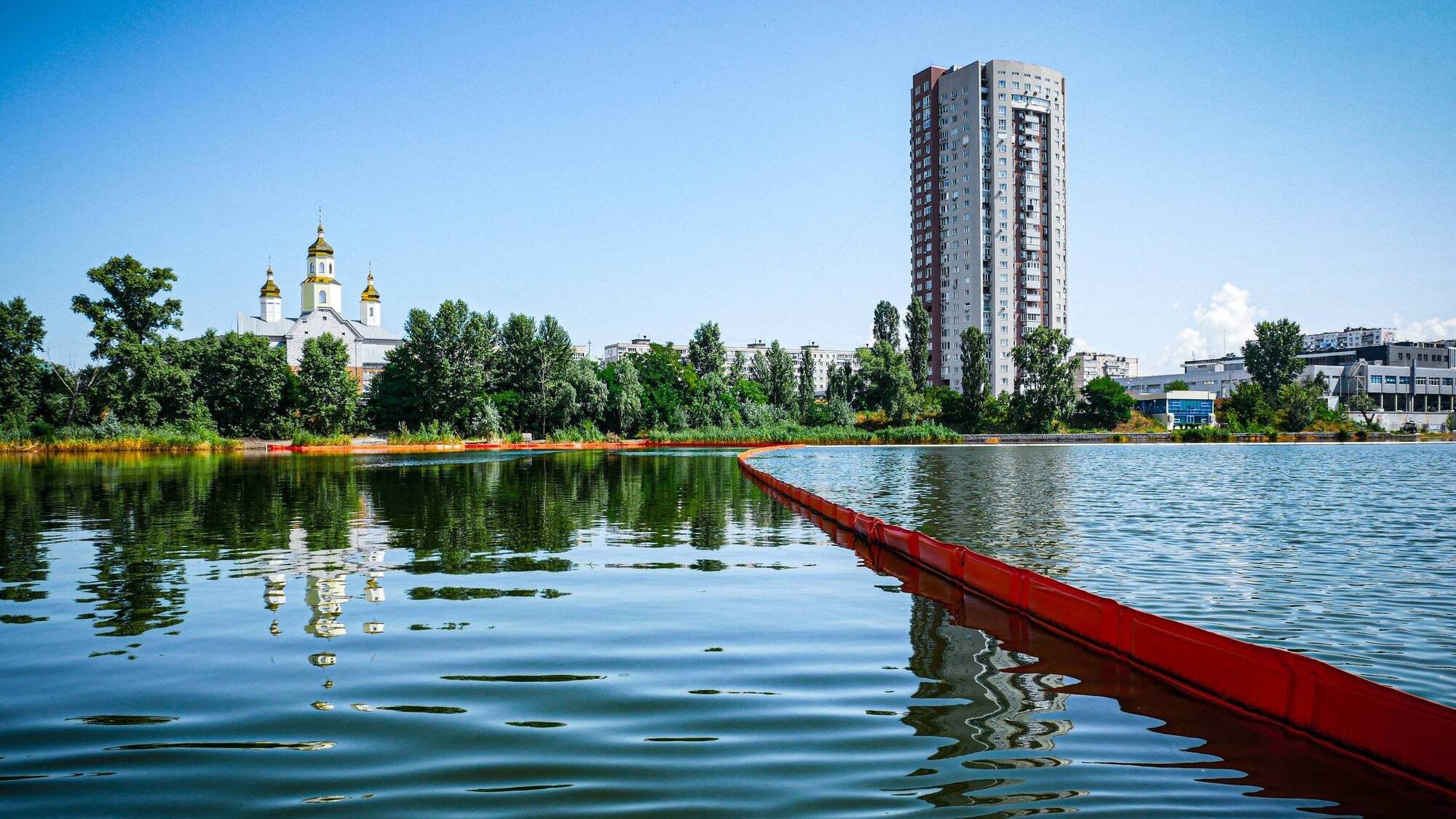
Kyiv Enters Second Week of Cleanup Operations After Oil Products Contaminate Lake Kyrylivske
Environmental remediation efforts continue in Ukraine’s capital as municipal workers enter their second week of intensive cleanup operations at Lake Kyrylivske, following a significant contamination incident involving petroleum products. The Kyiv municipal enterprise “Pleso” has deployed specialized equipment to address the ecological emergency, which has affected both the water body and surrounding vegetation in one of the city’s important natural areas.
The cleanup operation has entered a critical phase with the deployment of a Mobitrac amphibious machine, a sophisticated piece of equipment specifically designed for environmental remediation in wetland areas. This specialized vehicle is currently being used to remove contaminated reeds and other vegetation from the lake’s shoreline and shallow waters. The Mobitrac system is particularly effective in such scenarios as it can operate both on land and in water, allowing workers to access areas that would be impossible to reach with conventional machinery while minimizing additional damage to the sensitive ecosystem.
Lake Kyrylivske, located in the northern part of Kyiv, is part of the city’s extensive system of lakes and waterways that play a crucial role in the urban ecosystem. The lake serves as a habitat for various species of fish, birds, and aquatic plants, making the contamination particularly concerning for local environmentalists. Oil product spills in freshwater environments can have devastating long-term effects, creating a film on the water’s surface that prevents oxygen exchange, poisoning aquatic life, and accumulating in sediments where they can continue to cause harm for years.
The source and exact volume of the petroleum contamination have not been officially disclosed, but such incidents in urban areas typically result from illegal dumping, industrial accidents, or infrastructure failures in nearby facilities. Ukrainian environmental authorities have been increasingly vigilant about such incidents, as the country’s water resources face multiple pressures from both wartime conditions and ongoing industrial activities. The rapid response by municipal services reflects improved emergency protocols that have been developed in recent years to address environmental emergencies.
The removal of contaminated vegetation is a critical step in the remediation process, as reeds and other aquatic plants absorb petroleum products and can become secondary sources of pollution if left in place. Once removed, this biomass must be properly disposed of as hazardous waste to prevent further environmental contamination. Workers have been photographed operating the amphibious machinery along the lake’s edges, systematically clearing affected areas while attempting to preserve healthy vegetation that can aid in the natural recovery process.
Environmental experts note that complete ecosystem recovery from oil contamination can take anywhere from several months to several years, depending on the severity of the spill and the effectiveness of cleanup efforts. The presence of specialized equipment like the Mobitrac suggests that authorities are taking the incident seriously and investing significant resources in the remediation effort. Such machines can cost hundreds of thousands of euros and require trained operators, indicating a substantial municipal commitment to restoring the lake’s ecological health.
Local residents and environmental activists have been monitoring the cleanup progress, with many expressing concern about the long-term health of the lake and its wildlife. Lake Kyrylivske is popular among Kyiv residents for recreation and nature observation, making its restoration a priority for the community. Municipal authorities have indicated that cleanup operations will continue until water quality tests confirm that contamination levels have returned to acceptable standards, though no specific timeline for completion has been announced. The incident serves as a reminder of the ongoing challenges cities face in protecting urban water bodies from industrial and accidental pollution.