
Crucian Carp Now Accounts for Nearly Half of Ukraine’s Industrial Fish Catch as War Reshapes Fishing Industry
The ongoing war in Ukraine has fundamentally transformed the nation’s fishing industry, forcing a dramatic shift from traditional sea-based operations to inland waterways. According to recent data, crucian carp has emerged as the dominant species in Ukraine’s commercial fishing sector, now accounting for nearly half of all industrial fish catches in the country. This remarkable change reflects the broader economic and logistical challenges facing Ukrainian industries as they adapt to wartime conditions and the loss of access to critical maritime resources.
Before Russia’s full-scale invasion in February 2022, Ukraine maintained a diverse fishing industry that relied heavily on the Black Sea and Sea of Azov for commercial operations. These coastal waters provided access to valuable species including anchovy, sprat, and various other marine fish that formed the backbone of the country’s seafood sector. The ports of Odesa, Mariupol, and Berdyansk served as crucial hubs for fishing fleets and processing facilities. However, the military conflict has rendered much of this infrastructure inaccessible or dangerous, with naval mines, active combat zones, and Russian naval blockades making traditional fishing operations virtually impossible in many areas.
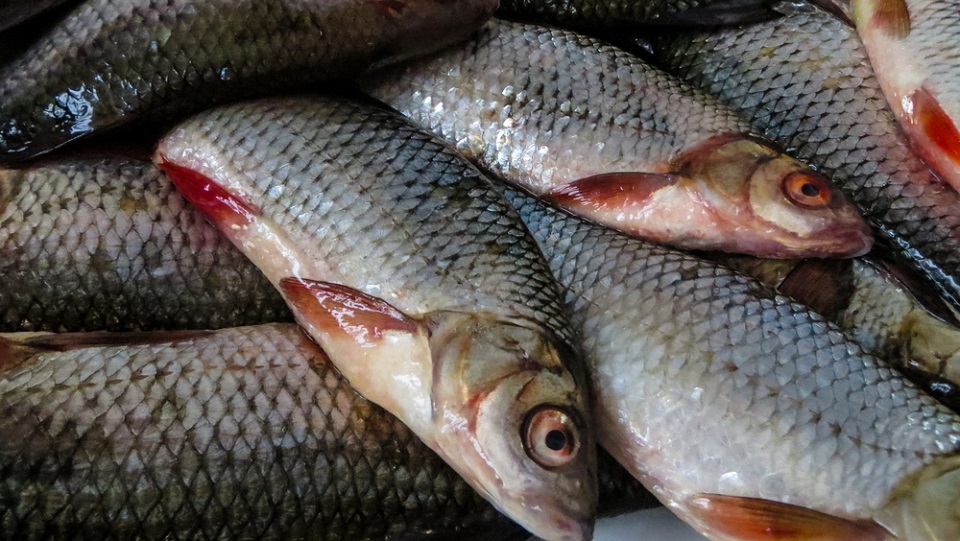
The transition to freshwater fishing represents both a survival strategy and an unprecedented challenge for the Ukrainian fishing industry. Inland waterways, including the Dnipro River system, numerous reservoirs, and thousands of smaller lakes and ponds, have become the primary source of commercial fish production. Crucian carp, a hardy freshwater species that thrives in Ukrainian rivers and lakes, has naturally risen to prominence due to its abundance and adaptability. This species, known locally as “karas,” has been a staple of Ukrainian cuisine for centuries, prized for its mild flavor and versatility in traditional dishes ranging from fried preparations to rich fish soups.
The dominance of crucian carp in current catch statistics also reflects the ecological characteristics of Ukraine’s inland waters. The country possesses an extensive network of freshwater resources, including the massive Dnipro River that runs through the heart of the nation, along with its associated reservoirs created during the Soviet era. These artificial lakes, originally built for hydroelectric power generation and irrigation, have developed into productive fishing grounds over decades. Crucian carp populations have flourished in these environments, particularly in slower-moving waters with abundant vegetation where the species naturally reproduces in large numbers.
Industry experts note that while the shift to inland fishing has allowed some continuity in commercial operations, it comes with significant limitations. Freshwater catches cannot fully replace the volume and variety previously obtained from marine sources. The economic value of inland fish species generally trails that of marine counterparts, and processing infrastructure designed for sea fish has been difficult to repurpose. Additionally, many fishing enterprises have lost equipment, personnel, and facilities to the conflict, with some operations located in occupied territories or active combat zones remaining completely inaccessible to their owners.
The Ukrainian government and fishing industry associations have been working to support the sector’s adaptation to these new realities. Efforts include streamlining permits for inland fishing operations, providing financial assistance to displaced fishing enterprises, and exploring partnerships with European Union markets that might offer new opportunities for freshwater fish exports. Some entrepreneurs have also expanded aquaculture operations, establishing fish farms that can operate independently of natural water bodies and provide more predictable production levels despite the ongoing instability.
Looking ahead, the future shape of Ukraine’s fishing industry will depend heavily on how the conflict evolves and when access to maritime resources might be restored. Reconstruction of port facilities, clearing of naval mines, and rebuilding of fishing fleets will require substantial investment and international support. In the meantime, the humble crucian carp continues to serve as a symbol of Ukrainian resilience and adaptability, sustaining both an industry and culinary traditions through one of the most challenging periods in the nation’s modern history. The fish that has long graced Ukrainian tables in times of peace has now become an unlikely pillar of the wartime economy, demonstrating how traditional resources can take on new significance when circumstances demand creative solutions to unprecedented challenges.