
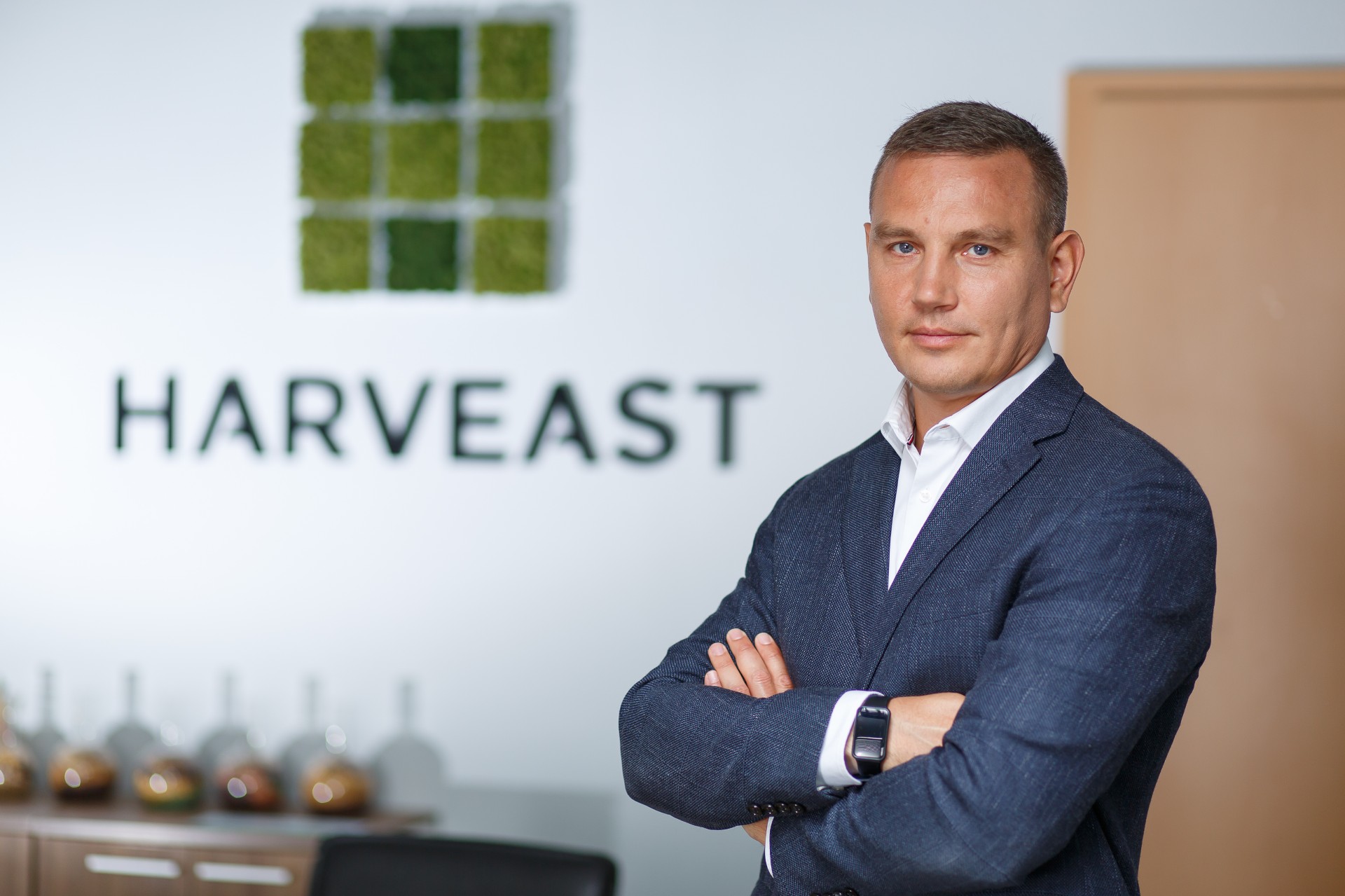
Pay Ukrainians $1000 and Migrants Become Unnecessary: Interview with CEO of Akhmetov’s Agricultural Holding
In a revealing interview, Dmytro Skornyakov, the CEO of HarvEast, one of Ukraine’s largest agricultural holdings owned by billionaire Rinat Akhmetov, shared his unconventional management philosophy and insights into running a major agribusiness during unprecedented challenges. His central thesis challenges common assumptions about Ukraine’s labor market: if companies pay workers competitive wages of around $1,000 per month, the need for migrant labor disappears entirely.
HarvEast, which manages over 100,000 hectares of agricultural land in eastern Ukraine, has been operating under extraordinary circumstances since 2014, when conflict first erupted in the Donbas region. The company, part of Akhmetov’s SCM Holdings empire, has had to adapt its entire operational model to function in a war zone while maintaining productivity and profitability. Skornyakov’s leadership during this period has drawn attention for its innovative approaches to crisis management and human resources.
The CEO’s statement about wages reflects a broader debate in Ukraine’s economy about labor migration and competitive compensation. Since the country’s borders opened to the European Union through visa-free travel, millions of Ukrainians have sought employment abroad, particularly in Poland, Czech Republic, and Germany, where wages significantly exceed domestic levels. This brain drain and labor shortage has affected multiple sectors, with agriculture being particularly hard hit during planting and harvest seasons. Skornyakov argues that businesses willing to pay European-comparable wages can retain skilled workers domestically.
What makes Skornyakov’s management approach particularly distinctive is his application of military doctrine to agricultural business operations. Given the company’s location in a conflict zone, this methodology has proven remarkably practical. Military principles of command structure, rapid decision-making, contingency planning, and operational flexibility have been adapted to manage everything from planting schedules to logistics chains that must navigate checkpoints and security concerns. The company has developed protocols for continuing operations even when artillery fire or military movements affect their fields.
The agricultural sector in Ukraine holds enormous strategic importance, as the country is often called the “breadbasket of Europe.” Ukraine ranks among the world’s top exporters of wheat, corn, sunflower oil, and barley. Before the full-scale invasion in 2022, Ukrainian agricultural exports contributed approximately $27 billion annually to the economy, representing nearly 45% of total export revenues. Companies like HarvEast play a crucial role in maintaining this vital economic sector, and their ability to operate under wartime conditions has implications far beyond Ukraine’s borders, affecting global food security.
Rinat Akhmetov, Ukraine’s wealthiest businessman with interests spanning steel, mining, energy, and agriculture, has seen his business empire severely affected by the ongoing conflict. His companies have lost assets worth billions of dollars in occupied territories, yet his agricultural holdings continue to adapt and operate. Akhmetov’s SCM group has historically been known for paying above-market wages and maintaining relatively high standards for workers, which aligns with Skornyakov’s philosophy about competitive compensation eliminating the need for foreign labor.
The interview also touched upon the practical challenges of modern Ukrainian agribusiness, including insurance difficulties, supply chain disruptions, fuel availability, and the constant risk to equipment and personnel. Skornyakov emphasized that military-style preparation and adaptability have been essential for survival. The company maintains multiple contingency plans, alternative supply routes, and emergency protocols that would be more commonly associated with military operations than farming. This hybrid approach to management has allowed HarvEast to maintain operations even in areas where other companies have been forced to withdraw.
Looking toward the future, Skornyakov expressed cautious optimism about Ukraine’s agricultural potential, noting that despite the challenges, the fundamental assets of rich black soil and experienced workforce remain. His wage philosophy suggests that post-war reconstruction could see Ukrainian agriculture not only recover but potentially transform its labor practices. If more companies adopt competitive compensation strategies, Ukraine might reverse its emigration trends and rebuild its workforce domestically, reducing dependence on seasonal migrant labor that many European agricultural sectors have come to rely upon.