
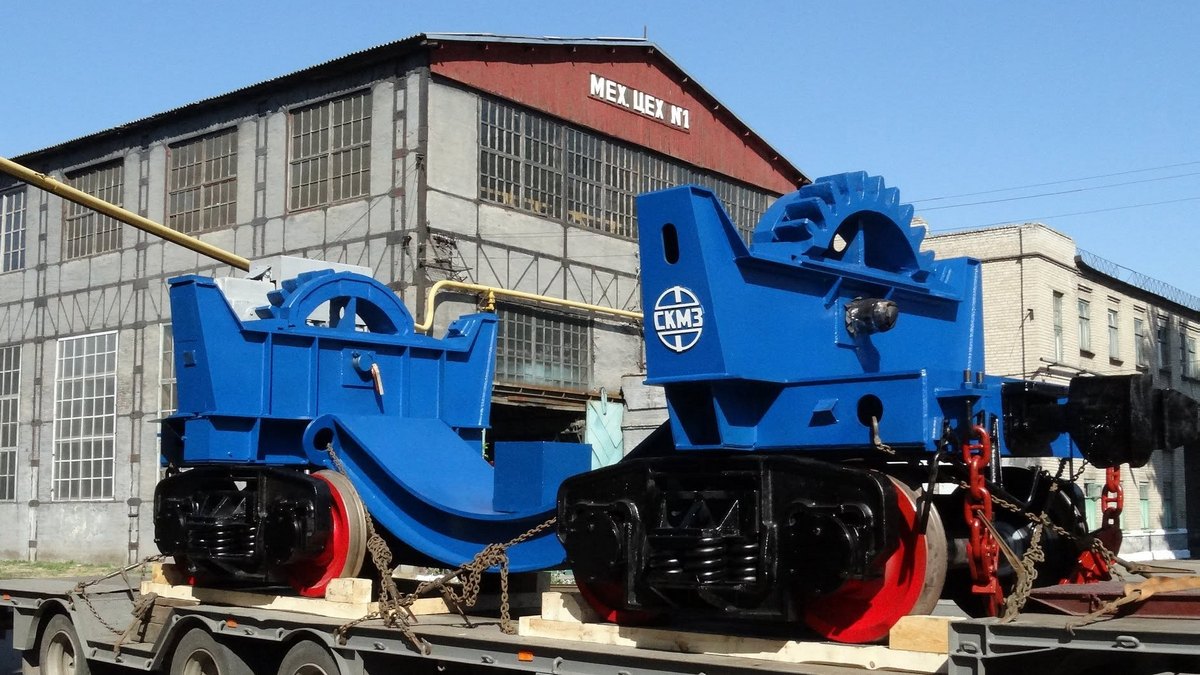
Historic Kramatorsk Machine-Building Plant Declared Bankrupt After 129 Years of Industrial Legacy
The Starokramatorsk Machine-Building Plant, one of Ukraine’s oldest and most historically significant industrial enterprises, has officially been declared bankrupt, marking the end of an era that spans nearly 130 years of Ukrainian industrial history. The liquidation procedure has been initiated for the facility that once stood as a symbol of heavy industry prowess in the Donetsk region, leaving behind a complex legacy intertwined with the economic and political turbulence that has characterized eastern Ukraine in recent decades.
Founded in 1896 during the rapid industrialization of the Russian Empire, the Starokramatorsk plant emerged as part of a broader wave of industrial development in the Donbas region. The factory was established to capitalize on the rich coal and iron ore deposits of the area, quickly becoming a cornerstone of heavy machine building in what would later become Soviet Ukraine. For over a century, the plant produced essential equipment for mining, metallurgy, and other heavy industries, employing thousands of workers and serving as the economic backbone of Kramatorsk, a city whose very identity became inseparable from its industrial heritage.
The plant’s history mirrors the dramatic transformations of the region itself. During the Soviet era, the Starokramatorsk facility expanded significantly, becoming one of the largest machine-building enterprises in the USSR. It manufactured heavy-duty cranes, mining equipment, rolling mill machinery, and specialized industrial apparatus that was exported across the socialist bloc and beyond. At its peak, the factory employed over 15,000 workers and was considered a flagship enterprise of Soviet industrial might. The collapse of the Soviet Union in 1991 brought initial challenges, but the plant managed to adapt to market conditions, finding new customers both domestically and internationally.
However, the events of 2014 proved devastating for the enterprise and the entire Donbas region. When armed conflict erupted in eastern Ukraine following Russia’s annexation of Crimea, Kramatorsk found itself on the front lines of the fighting. Although the city remained under Ukrainian government control, the broader instability severely disrupted supply chains, access to raw materials, and connections to traditional markets. Many skilled workers fled the region, and the plant struggled to maintain operations amid constant security threats and economic uncertainty. The situation only worsened with the full-scale Russian invasion in February 2022, which brought renewed military activity to the Donetsk region.
Economic analysts point to multiple factors contributing to the plant’s ultimate demise. Beyond the immediate impact of warfare, the enterprise faced long-standing structural challenges common to many post-Soviet industrial facilities. Outdated equipment, insufficient investment in modernization, and difficulties competing with more technologically advanced foreign manufacturers had gradually eroded the plant’s market position. The war accelerated these underlying weaknesses, cutting off access to Russian and Belarusian markets that had historically been significant customers, while making it nearly impossible to attract the investment needed for technological upgrades.
The bankruptcy of the Starokramatorsk plant carries profound implications for the local community and raises broader questions about Ukraine’s industrial future. Kramatorsk, which currently serves as the de facto administrative center of the Donetsk region’s Ukrainian-controlled territory, must now grapple with the loss of one of its defining institutions. For generations of local families, employment at the plant represented not just a livelihood but a source of identity and pride. The liquidation process will need to address the fate of remaining employees, the disposition of valuable industrial equipment, and the future use of the extensive factory grounds.
The closure also highlights the enormous economic toll that years of conflict have exacted on Ukraine’s industrial heartland. Before 2014, the Donetsk and Luhansk regions together accounted for approximately 16 percent of Ukraine’s GDP and were home to some of the country’s most important manufacturing and mining enterprises. The ongoing war has decimated this industrial base, with factories destroyed, damaged, or rendered inoperable due to proximity to active combat zones. Rebuilding this capacity represents one of the most significant challenges Ukraine will face in any post-war reconstruction effort.
As Ukraine continues to fight for its sovereignty and territorial integrity, the story of the Starokramatorsk plant serves as a poignant reminder of what is at stake. The 129-year history of this enterprise encompasses the heights of industrial achievement and the depths of economic catastrophe, reflecting the broader arc of a region caught between empires and ideologies. While the factory’s physical presence may soon disappear, its legacy as a testament to Ukrainian industrial capability and resilience will endure in the collective memory of those whose lives it shaped across more than a century of operation.