
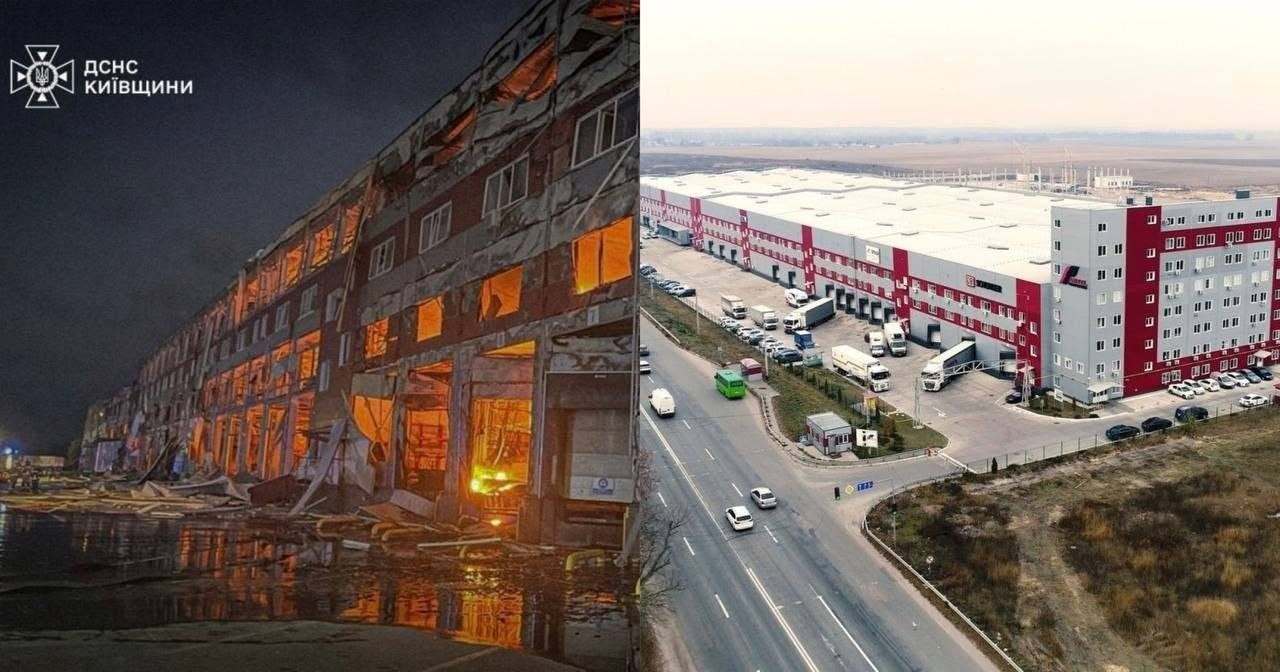
Massive Warehouse Complex Near Kyiv Destroyed in Overnight Shelling Attack
A devastating strike has completely destroyed the Amtel warehouse complex located in the Kyiv region, eliminating approximately 100,000 square meters of critical logistics infrastructure. The facility, which served as a hub for major international logistics operators and commercial enterprises, represents one of the largest single-target losses of civilian infrastructure in recent months. Ukrainian authorities confirmed the destruction overnight, though details regarding casualties and the full extent of damage to stored goods remain under investigation.
The Amtel complex had established itself as one of Ukraine’s premier logistics centers, strategically positioned near the capital to facilitate distribution networks across the country and into European markets. The facility housed operations for numerous multinational corporations that had maintained their presence in Ukraine despite ongoing hostilities. Major retail chains, e-commerce platforms, and industrial suppliers had utilized the complex’s modern storage facilities, temperature-controlled warehouses, and advanced inventory management systems to sustain supply chains serving millions of Ukrainian consumers.
The destruction of such a significant logistics hub carries substantial implications for Ukraine’s already strained supply chains. Modern warfare increasingly targets critical infrastructure beyond traditional military objectives, and logistics facilities have become particularly vulnerable. The Amtel complex represented years of investment in Ukraine’s commercial infrastructure, with its construction and development reflecting broader efforts to modernize the country’s logistics capabilities following independence. Such facilities are essential for maintaining civilian access to essential goods, from food and medicine to construction materials needed for ongoing reconstruction efforts.
International logistics companies operating from the complex had implemented numerous contingency measures since the beginning of the conflict, including dispersing inventory across multiple locations and establishing backup distribution routes. However, the concentration of operations at major hubs like Amtel remained necessary for efficient large-scale distribution. Industry experts estimate that replacing such infrastructure could take years and require investments exceeding hundreds of millions of dollars, assuming stable conditions for reconstruction.
The attack on civilian logistics infrastructure raises renewed concerns about the economic warfare dimension of the ongoing conflict. Similar strikes on warehouse facilities, port infrastructure, and transportation networks have cumulatively degraded Ukraine’s ability to maintain normal economic activity. The World Bank has documented extensive damage to Ukraine’s commercial and industrial facilities, with logistics infrastructure suffering particularly significant losses due to its critical role in sustaining both civilian needs and reconstruction efforts.
Ukrainian officials have repeatedly called for enhanced air defense systems to protect critical infrastructure from such attacks. The capital region has received substantial defensive coverage, yet the sheer volume of incoming threats makes comprehensive protection challenging. Western allies have supplied various air defense systems, including Patriot batteries and NASAMS, but military analysts note that protecting sprawling industrial zones requires resources beyond what is currently available. The loss of the Amtel complex underscores the ongoing vulnerability of fixed infrastructure assets.
Looking ahead, the destruction will likely force logistics operators to accelerate diversification strategies, potentially shifting more operations to western Ukraine or establishing cross-border facilities in neighboring Poland, Romania, and Moldova. Some companies had already begun this process, but the loss of the Amtel complex may accelerate these trends. For Ukrainian consumers and businesses, the immediate impact will manifest in potential delays and increased costs for goods that had been routed through the destroyed facility. Reconstruction plans, when they emerge, will need to account for lessons learned about vulnerability and the need for more distributed logistics networks capable of withstanding continued attacks on critical infrastructure.