
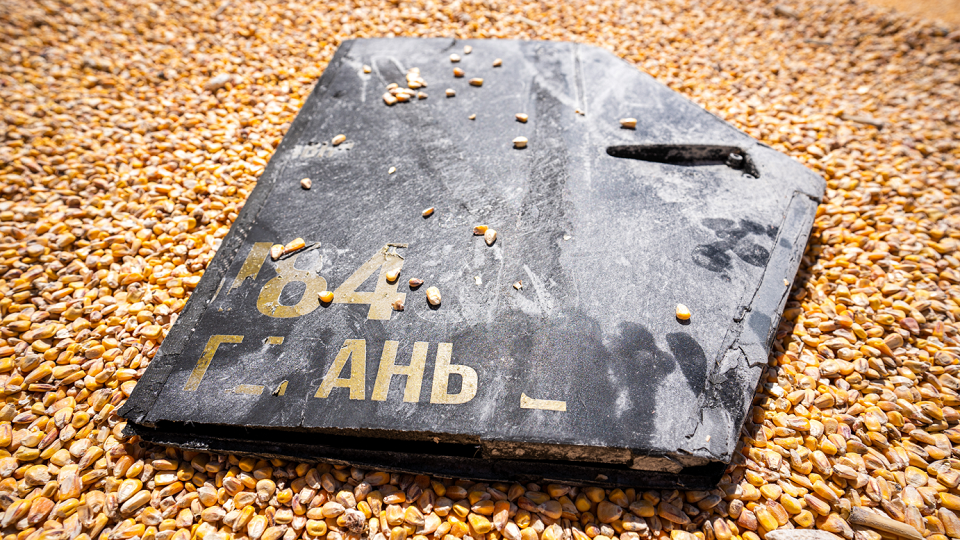
Russian Drone Strike Damages Major Kernel Grain Terminal in Chornomorsk, Ukraine
Ukraine’s largest agricultural exporter, Kernel Holding, has released photographs documenting the aftermath of a Russian drone attack that struck its grain terminal in the Black Sea port city of Chornomorsk on June 5, 2025. The strike represents yet another blow to Ukraine’s critical agricultural infrastructure, which has been systematically targeted throughout the ongoing conflict that began with Russia’s full-scale invasion in February 2022. The images reveal significant structural damage to storage facilities and loading equipment essential for grain export operations.
The Chornomorsk terminal serves as one of the most strategically important export hubs for Ukrainian agricultural products, handling millions of tons of grain destined for markets across Africa, the Middle East, and Asia. Kernel, which operates as the country’s dominant agribusiness conglomerate, controls an extensive network of grain elevators, oil extraction plants, and port facilities throughout Ukraine. The company has historically exported approximately 10-12 million tons of grain annually, making it a cornerstone of Ukraine’s position as one of the world’s leading grain suppliers and a critical link in global food security chains.
The attack on June 5 occurred amid an intensified Russian campaign targeting Ukrainian port infrastructure along the Black Sea coast. Since Moscow’s withdrawal from the Black Grain Initiative in July 2023, which had provided safe passage for Ukrainian grain exports, Russian forces have conducted hundreds of strikes against port facilities, storage warehouses, and transportation networks. These attacks have forced Ukrainian exporters to develop alternative shipping routes and security protocols, significantly increasing operational costs and reducing export capacity during peak harvest seasons.
The strategic importance of Ukrainian grain exports cannot be overstated in the context of global food security. Before the war, Ukraine ranked as the world’s fifth-largest wheat exporter and fourth-largest corn exporter, supplying essential foodstuffs to dozens of developing nations. The systematic destruction of agricultural infrastructure has contributed to elevated food prices worldwide, with particularly severe impacts felt in food-importing countries across North Africa and the Horn of Africa. International organizations, including the United Nations World Food Programme, have repeatedly warned that continued attacks on Ukrainian agricultural assets threaten to exacerbate hunger crises affecting millions of vulnerable people.
Kernel Holding, founded in 1995 and headquartered in Luxembourg with primary operations in Ukraine, has invested heavily in rebuilding and fortifying its facilities despite the ongoing conflict. The company operates over 40 grain elevators across Ukraine’s agricultural heartland and controls significant crushing capacity for sunflower seeds, another major Ukrainian export commodity. Despite facing extraordinary challenges including infrastructure damage, workforce disruptions, and logistics complications, Kernel has maintained operations throughout the war, adapting its business model to ensure continued grain flow to international markets.
The port of Chornomorsk, located approximately 20 kilometers south of Odesa, has emerged as a critical node in Ukraine’s maritime export corridor established after the collapse of the grain deal. Ukrainian naval forces and coastal defense units have worked to establish a humanitarian corridor hugging the western Black Sea coastline, allowing commercial vessels to transit despite the ongoing threat of Russian naval and aerial attacks. This corridor has enabled Ukraine to export substantial volumes of grain, though capacity remains below pre-war levels and insurance costs for vessels entering the zone have skyrocketed.
International condemnation of attacks on food infrastructure has been swift and widespread. The European Union, United States, and numerous international bodies have characterized the targeting of grain facilities as deliberate economic warfare with humanitarian consequences extending far beyond Ukraine’s borders. Agricultural industry analysts note that repeated strikes on terminal facilities not only destroy immediate storage and handling capacity but also deter investment in repairs and expansion, creating long-term constraints on Ukraine’s ability to fulfill its role as a global breadbasket. As Ukraine approaches its summer harvest season, the resilience of its agricultural export infrastructure will remain a critical factor determining both the nation’s economic survival and global food price stability in the months ahead.