
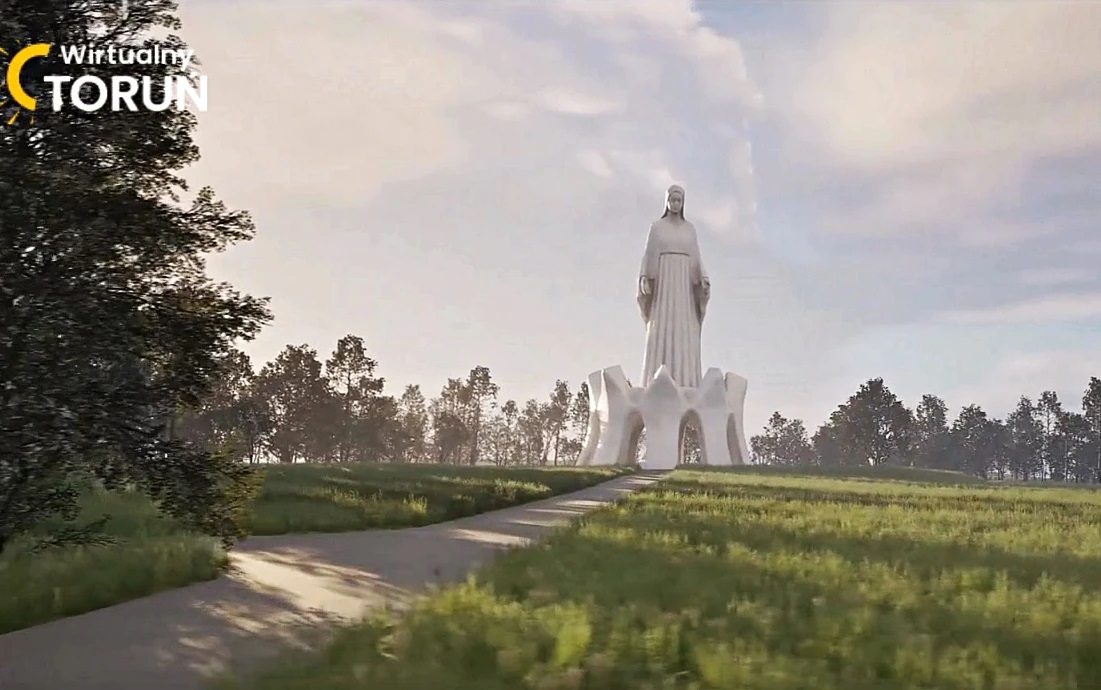
Polish Billionaire Constructs 55-Meter Virgin Mary Statue Set to Surpass Rio’s Christ the Redeemer
In a remarkable display of religious devotion and architectural ambition, Polish billionaire Roman Karkosik is overseeing the construction of what will become one of the world’s tallest religious monuments. The 55-meter statue of the Virgin Mary, currently being erected in Poland, will stand taller than the iconic Christ the Redeemer statue in Rio de Janeiro, Brazil, which measures 30 meters in height excluding its pedestal. This monumental project represents not only a significant engineering feat but also reflects the deep Catholic traditions that continue to shape Polish cultural and spiritual life.
The statue is being installed adjacent to a pilgrimage center that Karkosik established 14 years ago, demonstrating his long-standing commitment to creating sacred spaces for religious worship and reflection. The industrialist, who made his fortune as the founder of Boryszew — a major Polish industrial conglomerate specializing in automotive components, chemicals, and metal processing — has channeled substantial personal resources into this ambitious religious project. Boryszew has grown to become one of Poland’s largest companies, with operations spanning multiple continents and employing thousands of workers worldwide.
Poland has a profound history with monumental religious statuary, most notably demonstrated by the Christ the King statue in Świebodzin, which was completed in 2010. That monument stands at 33 meters tall, with an additional 3-meter crown and a 16-meter mound, making it technically taller than Rio’s famous landmark. The new Virgin Mary statue appears positioned to continue this tradition of grand-scale religious monuments that have become defining features of the Polish landscape. These structures serve as both pilgrimage destinations and symbols of national Catholic identity in a country where over 85 percent of the population identifies as Roman Catholic.
The engineering challenges involved in constructing such a massive statue are considerable. Projects of this scale require extensive foundation work, specialized materials capable of withstanding extreme weather conditions, and precise engineering calculations to ensure structural integrity for centuries to come. Similar monumental statue projects around the world, such as the Spring Temple Buddha in China (128 meters) and the Statue of Unity in India (182 meters), have required years of planning and construction, along with budgets reaching into hundreds of millions of dollars. The Virgin Mary statue in Poland joins this exclusive group of mega-monuments that push the boundaries of architectural possibility.
Religious tourism represents a significant economic sector in Poland, with millions of visitors annually traveling to sites such as Częstochowa, home to the famous Black Madonna icon, and the former residence of Pope John Paul II in Wadowice. The addition of another major pilgrimage destination is expected to boost local economies and provide employment opportunities in hospitality, transportation, and related services. Experts in religious tourism suggest that monumental structures often become anchor attractions that can revitalize entire regions, drawing both domestic pilgrims and international visitors seeking spiritual experiences.
The choice to construct a statue of the Virgin Mary carries particular significance in Polish Catholic tradition, where Marian devotion has played a central role for centuries. Poland has been referred to as the “land of Mary” due to the strong veneration of the Virgin, with the Black Madonna of Częstochowa serving as the country’s most revered religious image since the medieval period. King Jan Kazimierz officially declared Mary the Queen and Protector of Poland in 1656, establishing a tradition of Marian devotion that continues to influence Polish religious and cultural life to this day.
As construction progresses on this ambitious project, the statue is drawing attention from religious communities and architecture enthusiasts worldwide. When completed, the monument will stand as a testament to contemporary religious expression and the enduring role of faith in Polish society. For Roman Karkosik, the project represents the culmination of years of dedication to creating spaces for spiritual reflection and worship, transforming his business success into a lasting legacy that he hopes will inspire generations of pilgrims and visitors for centuries to come.