
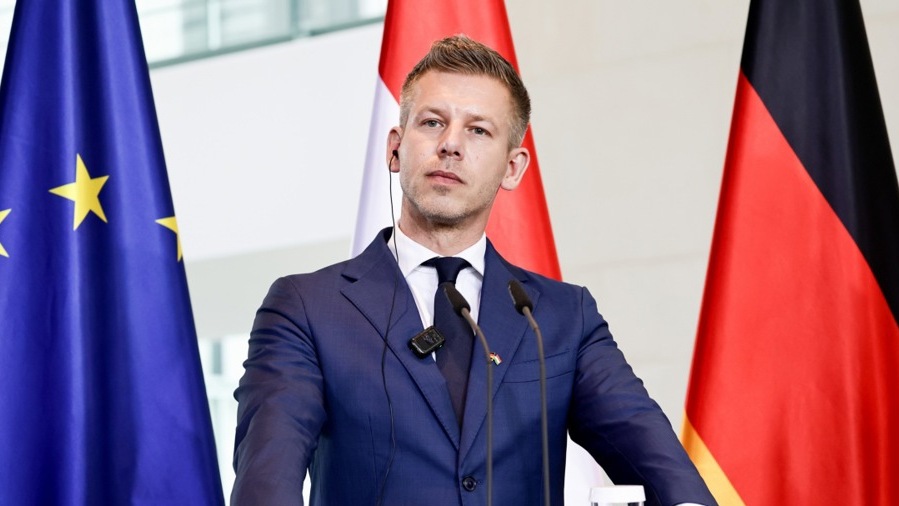
Hungary Seeks Energy Diversification to Strengthen Security and Lower Prices, Prime Minister Declares
Hungarian Prime Minister Viktor Orbán has announced that his government will actively pursue diversification of the country’s energy supplies, emphasizing that this strategic shift will help reduce energy costs for consumers while simultaneously strengthening the nation’s energy security. The declaration marks a significant policy statement from a leader who has long maintained close energy ties with Russia, suggesting a potential recalibration of Hungary’s approach to securing vital energy resources in an increasingly volatile geopolitical landscape.
The announcement comes at a critical juncture for European energy markets, which have experienced unprecedented turbulence since Russia’s invasion of Ukraine in February 2022. Hungary, a landlocked Central European nation of approximately 10 million people, has historically been one of the European Union’s most energy-dependent states, relying heavily on Russian natural gas and oil imports. The country receives the majority of its natural gas through pipelines originating in Russia, and its sole nuclear power plant at Paks has been undergoing expansion with Russian technological assistance and financing under a controversial agreement signed in 2014.
Hungary’s energy infrastructure reflects decades of integration with Soviet and later Russian supply networks. The country imports roughly 80 percent of its natural gas and nearly all of its crude oil from foreign sources, with Russia traditionally serving as the dominant supplier. The Druzhba pipeline, one of the world’s longest oil pipeline networks built during the Soviet era, continues to deliver crude oil to Hungary’s refineries. This deep interconnection has made any rapid pivot away from Russian energy supplies both technically challenging and economically complex, requiring substantial investment in alternative infrastructure and supply contracts.
Energy analysts have noted that Hungary’s diversification efforts, while welcomed by European Union partners, face significant practical hurdles. The country lacks direct access to maritime ports, limiting its ability to receive liquefied natural gas (LNG) shipments that have become increasingly important for European energy security. However, recent infrastructure developments, including interconnector pipelines with neighboring countries and expanded gas storage facilities, have begun to provide Hungary with greater flexibility in sourcing energy from alternative suppliers. The country has been working to expand connections with Croatian LNG terminals and Romanian gas fields in the Black Sea region.
The timing of Orbán’s diversification announcement is particularly noteworthy given Hungary’s complex relationship with both the European Union and Russia. Budapest has frequently clashed with Brussels over energy policy, initially securing exemptions from EU sanctions on Russian oil imports and maintaining dialogue with Moscow even as other European capitals severed ties. Critics have accused the Hungarian government of using energy dependency as a pretext to maintain privileged relations with the Kremlin, while supporters argue that Hungary’s geographical position and limited alternatives necessitate a pragmatic approach to energy security.
From a historical perspective, Hungary’s energy vulnerability was dramatically illustrated during the 2009 Russia-Ukraine gas dispute, when supply disruptions left millions of Europeans without heating during winter months. That crisis prompted the European Union to accelerate efforts toward energy market integration and supply diversification, though progress remained uneven across member states. The current situation has reinvigorated these efforts, with the EU committing to reduce dependence on Russian fossil fuels under its REPowerEU plan, which aims to achieve energy independence from Russian supplies before 2030.
Hungary has also been expanding its renewable energy capacity as part of its broader diversification strategy. Solar power installations have grown substantially in recent years, with the country’s solar capacity increasing from negligible levels a decade ago to several gigawatts today. The government has set ambitious targets for renewable energy development, though critics argue that more aggressive action is needed to meet climate commitments and reduce fossil fuel dependency. The expansion of the Paks nuclear plant, despite its Russian connections, is also framed as a carbon-free energy source that will provide baseload power and reduce the need for imported fossil fuels.
Looking ahead, the success of Hungary’s energy diversification efforts will depend on substantial infrastructure investments, cooperative relationships with neighboring countries, and continued commitment to alternative energy development. The Hungarian government’s announcement signals recognition that energy security in the 21st century requires multiple supply sources and reduced dependency on any single provider. Whether this declaration translates into concrete policy changes that fundamentally alter Hungary’s energy landscape remains to be seen, but the statement itself represents an important acknowledgment of the strategic imperative for diversification in an uncertain global energy environment.