
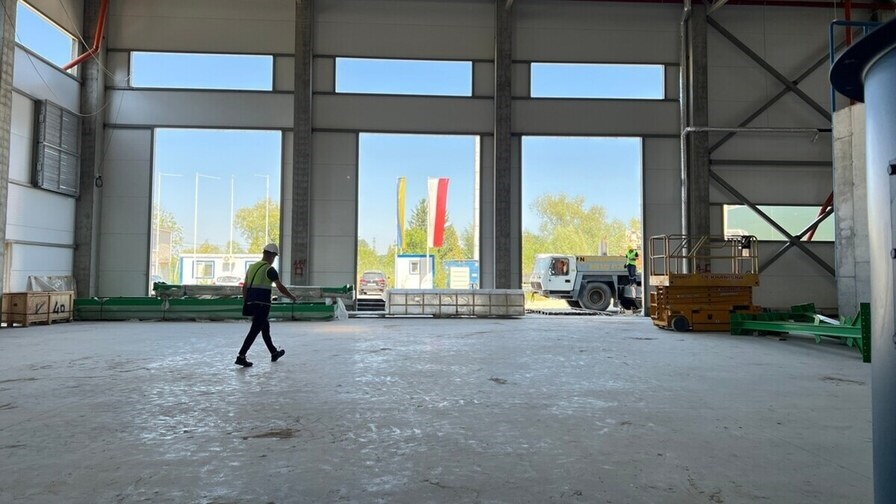
Polish Bank Returns Nearly €1 Million Advance Payment to Lviv for Waste Processing Plant Construction
The city of Lviv, Ukraine, has successfully recovered approximately €1 million in unused advance payments following the activation of a bank guarantee related to the construction of a waste processing facility. This significant financial recovery marks an important development in the city’s ongoing efforts to address its waste management challenges, which have plagued the western Ukrainian metropolis for nearly a decade.
The returned funds represent the remainder of an advance payment that was originally allocated for the construction of a modern waste processing plant in Lviv. When the contracted company failed to fulfill its obligations under the agreement, city authorities invoked the bank guarantee held by a Polish financial institution. This protective measure, standard in large-scale construction contracts, ensures that municipal funds are safeguarded against contractor default or project abandonment.
Lviv’s waste management crisis dates back to 2016 when a catastrophic fire at the Hrybovychi landfill killed several people and rendered the facility unusable. The tragedy left Ukraine’s cultural capital without a proper waste disposal site, forcing authorities to negotiate with neighboring regions to accept Lviv’s garbage temporarily. At its peak, the crisis saw trash piling up in city streets, creating public health concerns and damaging the city’s reputation as a major tourist destination known for its UNESCO World Heritage-listed historic center.
The construction of a modern waste processing facility has been viewed as the ultimate solution to Lviv’s waste management problems. Such plants typically employ advanced technologies including mechanical-biological treatment, waste-to-energy conversion, and sophisticated recycling systems. These facilities can process hundreds of thousands of tons of waste annually, significantly reducing the volume of material sent to landfills while generating electricity or heat as byproducts.
International partnerships have been crucial in Lviv’s efforts to modernize its waste infrastructure. Poland, as a neighboring EU member state, has been particularly involved in supporting Ukrainian municipal development projects. Polish banks and construction companies have extensive experience in waste management infrastructure, having modernized their own systems to meet strict European Union environmental standards following Poland’s EU accession in 2004. The involvement of Polish financial institutions in guaranteeing such projects reflects the broader economic ties between western Ukraine and its western neighbors.
The recovery of nearly €1 million provides Lviv with an opportunity to restart the tendering process and potentially engage a new contractor capable of completing the waste processing facility. Ukrainian municipalities have increasingly incorporated stronger contractual protections into infrastructure agreements, learning from past experiences where projects stalled or contractors underperformed. Bank guarantees, performance bonds, and milestone-based payments have become standard requirements in major municipal contracts.
Looking ahead, Lviv’s waste management modernization remains a priority despite the ongoing challenges posed by Russia’s full-scale invasion of Ukraine, which began in February 2022. The war has complicated infrastructure development across the country, but western Ukrainian cities like Lviv, which have been relatively less affected by direct military action, continue to pursue long-term development projects. The city has also seen a significant population increase due to internal displacement, making efficient waste management even more critical. Municipal authorities hope that the recovered funds, combined with potential additional financing from international donors and development banks, will enable the eventual completion of a state-of-the-art waste processing facility that can serve the city’s needs for decades to come.