
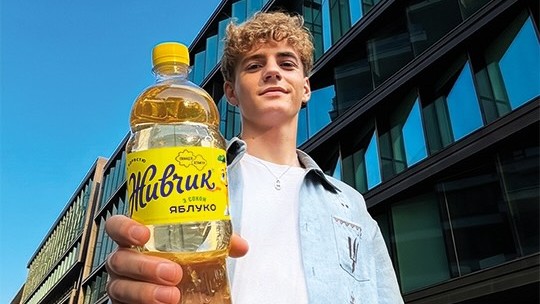
Ukrainian Beverage Brand ‘Zhyvchyk’ Announces Font Changes Following Public Backlash Over Rebrand Design
One of Ukraine’s most beloved soft drink brands, Zhyvchyk, has found itself at the center of a public relations storm after unveiling a new visual identity that sparked immediate criticism from Ukrainian consumers and design professionals. The iconic apple-flavored beverage, which has been a staple in Ukrainian households for decades, announced it would replace certain design elements following the backlash, specifically addressing concerns about the typography used in its refreshed packaging.
The company issued a statement defending its rebranding process, explaining that the controversial font was proposed by a partner design agency and was legitimately purchased through an international font marketplace. However, the explanation did little to quell the criticism, as many Ukrainians on social media pointed out that the chosen typography bore uncomfortable similarities to fonts commonly associated with Russian design aesthetics. In the context of the ongoing war and Russian invasion, such associations have become particularly sensitive for Ukrainian consumers who have been actively supporting domestic brands and rejecting anything perceived as connected to the aggressor nation.
The Zhyvchyk brand holds a special place in Ukrainian consumer culture. First introduced during the Soviet era and later revitalized as an independent Ukrainian product, the apple-based soft drink has become synonymous with childhood memories for millions of Ukrainians. The brand’s name, which roughly translates to ‘little lively one’ or ‘sprightly,’ reflects the drink’s positioning as an energizing, natural beverage. Over the years, Zhyvchyk has successfully competed against international giants like Coca-Cola and Pepsi by emphasizing its Ukrainian heritage and using locally sourced apple concentrate.
The rebranding controversy highlights a broader phenomenon that has intensified since Russia’s full-scale invasion of Ukraine in February 2022. Ukrainian consumers have become increasingly vigilant about the visual and cultural elements associated with the products they purchase. This heightened awareness has led to what some marketing experts call ‘patriotic consumption,’ where buying decisions are influenced not just by price and quality, but by a brand’s perceived alignment with Ukrainian values and identity. Several companies have faced similar backlash for design choices, advertising campaigns, or business connections that consumers deemed insufficiently Ukrainian or too closely associated with Russian culture.
Design professionals have weighed in on the controversy, noting that font selection in branding is far more significant than many people realize. Typography carries cultural connotations and historical associations that can subconsciously influence consumer perception. In the current geopolitical climate, Ukrainian brands are increasingly turning to domestically developed fonts and design elements created by Ukrainian artists and typographers. This trend has sparked a renaissance in Ukrainian graphic design, with new foundries and design studios emerging to meet the demand for authentically Ukrainian visual identities.
The company’s swift response to the criticism demonstrates the power of social media-driven consumer activism in modern marketing. Within hours of the backlash gaining momentum online, Zhyvchyk’s management announced they would work with their design partners to replace the controversial fonts with alternatives that better reflect the brand’s Ukrainian identity. This rapid pivot, while potentially costly in terms of reprinting packaging materials and updating marketing assets, was likely seen as necessary to preserve the brand’s reputation among its loyal customer base.
Industry analysts suggest this incident serves as a cautionary tale for companies undergoing rebranding efforts in Ukraine. The stakes for getting visual identity right have never been higher, and brands must carefully consider not just aesthetic appeal but also the cultural and political implications of their design choices. As Ukraine continues to assert its distinct cultural identity separate from Russian influence, consumer brands will need to navigate these sensitivities with care. The Zhyvchyk case ultimately demonstrates that in today’s Ukraine, brand loyalty is deeply intertwined with national identity, and companies that fail to recognize this connection risk losing the trust of consumers who have more options than ever to support businesses that align with their values.