
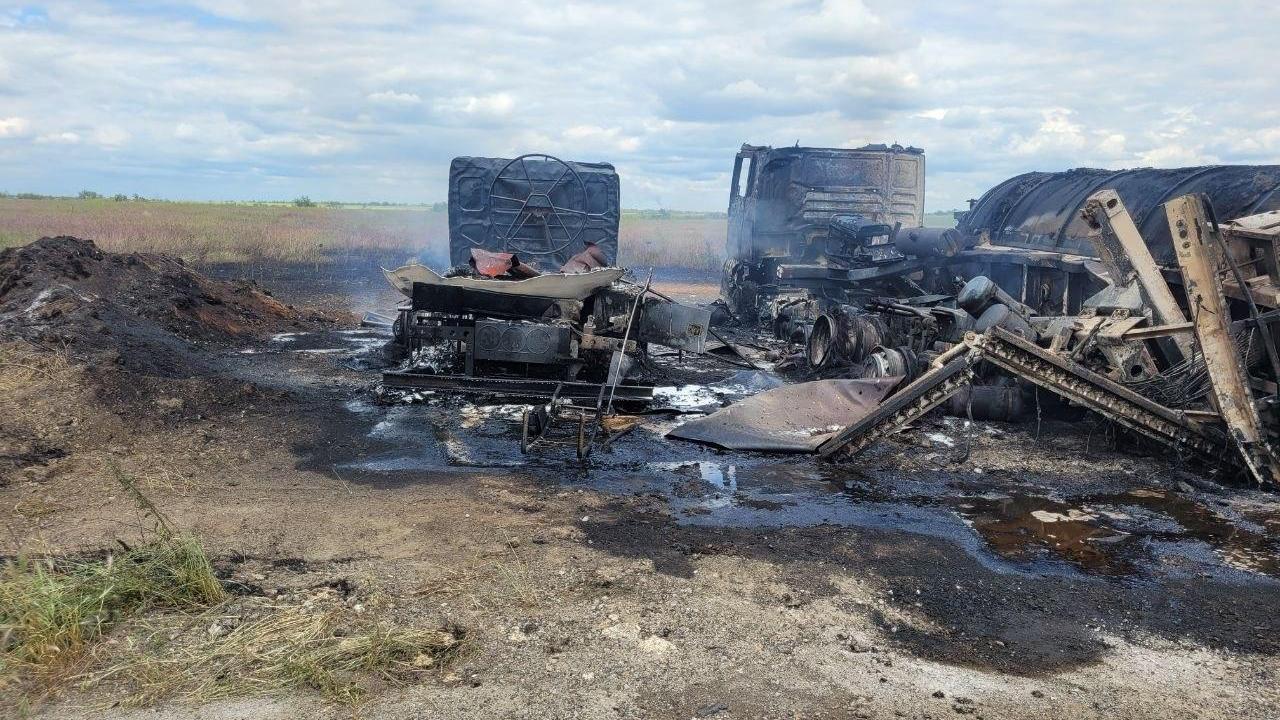
Russian Drone Strike Destroys 10 Pieces of Road Construction Equipment in Ukraine
A devastating Russian drone attack has destroyed ten pieces of road construction equipment at a civilian infrastructure work site in Ukraine, according to reports emerging from the conflict zone. The strike, which targeted what appears to be a non-military road maintenance operation, highlights the ongoing vulnerability of civilian workers and infrastructure projects in the war-torn nation. Photographs from the scene reveal the charred remains of heavy machinery, underscoring the indiscriminate nature of drone warfare that has become a hallmark of this conflict.
The attack represents another example of how Russia’s military campaign continues to impact civilian infrastructure across Ukraine. Road construction and maintenance crews, essential for maintaining transportation networks and enabling humanitarian aid delivery, have increasingly found themselves in the crosshairs of military operations. These workers perform critical functions in keeping supply routes open for both civilian populations and emergency services, making such attacks particularly damaging to Ukraine’s ability to maintain basic infrastructure services during wartime conditions.
Drone warfare has fundamentally transformed the nature of the conflict in Ukraine since Russia’s full-scale invasion began in February 2022. Both sides have deployed unmanned aerial vehicles extensively, ranging from small commercial drones modified for reconnaissance and dropping grenades to larger military-grade systems capable of carrying significant payloads. The proliferation of these relatively inexpensive weapons has made it increasingly difficult to protect civilian infrastructure, as drones can operate with minimal detection and strike targets far from the front lines. Experts estimate that thousands of drones are being used monthly by both sides in the conflict.
The destruction of road construction equipment carries significant economic implications for Ukraine’s already strained resources. Heavy machinery such as excavators, bulldozers, graders, and asphalt pavers represent substantial investments, often worth hundreds of thousands of dollars per unit. With international supply chains disrupted and the urgent need to maintain both military logistics routes and civilian transportation networks, the loss of ten pieces of equipment in a single strike creates immediate operational challenges. Ukraine has been working to repair damaged roads and bridges throughout the conflict, with support from international partners who have provided both funding and equipment for infrastructure restoration efforts.
International humanitarian law, including the Geneva Conventions, provides protections for civilian infrastructure and workers not directly participating in hostilities. However, documenting and prosecuting violations during active conflicts remains challenging. The International Criminal Court has been investigating potential war crimes in Ukraine since the invasion began, and attacks on civilian infrastructure could potentially fall under its jurisdiction. Human rights organizations have documented numerous instances of strikes on civilian targets throughout the conflict, though determining military necessity and proportionality in specific cases requires detailed investigation.
The targeting of road infrastructure has been a consistent element of Russia’s military strategy throughout the conflict. By disrupting transportation networks, military planners aim to impede the movement of troops, supplies, and equipment. However, these same roads serve essential civilian purposes, including evacuation routes for populations fleeing combat zones, delivery paths for humanitarian aid, and basic transportation for everyday life. The dual-use nature of roads makes them particularly difficult to protect under international humanitarian frameworks, though attacks clearly targeting civilian work crews raise serious legal and ethical questions.
Ukraine’s infrastructure has suffered extensive damage since the war began, with estimates suggesting that reconstruction costs could exceed hundreds of billions of dollars. The World Bank, European Union, and United Nations have jointly assessed that Ukraine’s recovery and reconstruction needs amount to approximately $486 billion as of late 2023, a figure that continues to grow as the conflict persists. Road networks represent a significant portion of these needs, as they are essential for economic recovery, agricultural exports, and the eventual return of displaced populations. The destruction of construction equipment not only represents an immediate loss but also delays the ongoing efforts to maintain and repair vital infrastructure that millions of Ukrainians depend upon daily.