
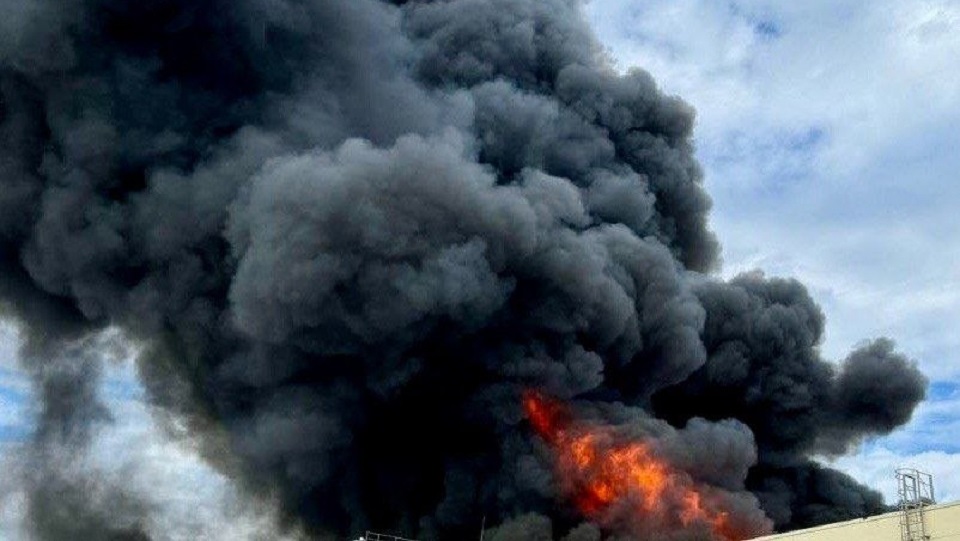
Russian Ballistic Missile Strike Targets ATB Warehouses in Dnipro Suburb, Causes Major Fire
A Russian ballistic missile strike hit warehouse facilities belonging to ATB, one of Ukraine’s largest retail grocery chains, in a suburb of Dnipro on June 3rd, according to Ukrainian officials and local reports. The attack resulted in civilian casualties, with multiple people reported injured, and ignited a significant fire at the storage complex. Video footage circulating on social media showed thick plumes of black smoke rising from the industrial area as emergency services rushed to respond to the incident.
The strike on Dnipro, Ukraine’s fourth-largest city with a pre-war population of approximately one million people, represents a continuation of Russia’s campaign targeting Ukrainian infrastructure and civilian facilities deep behind the front lines. ATB-Market operates over 1,300 stores across Ukraine and serves as a critical component of the country’s food supply chain, making its logistics centers strategically important for maintaining civilian access to essential goods during wartime conditions.
Local authorities quickly mobilized emergency response teams to the scene, working to contain the blaze and assist those wounded in the attack. The use of ballistic missiles in this strike follows an escalating pattern of Russian tactics employing various long-range weapons against Ukrainian cities, including cruise missiles, Iranian-made Shahed drones, and increasingly, ballistic missiles that are harder to intercept due to their high-speed trajectories and limited warning time for air defense systems.
Dnipro has emerged as one of the most frequently targeted cities in Ukraine since Russia’s full-scale invasion began in February 2022. Its strategic importance stems from its position as a major industrial hub along the Dnieper River and its role as a key logistics center for supplying Ukrainian forces in the eastern and southern regions of the country. The city’s aerospace and defense manufacturing facilities, along with its railway connections, have made it a repeated target for Russian missile strikes throughout the conflict.
The targeting of civilian commercial infrastructure has drawn repeated condemnation from international observers and human rights organizations. Strikes on supermarket chains, shopping centers, and food storage facilities raise serious questions under international humanitarian law, which requires military forces to distinguish between civilian and military targets. Human Rights Watch and Amnesty International have documented numerous instances where Russian strikes have hit clearly civilian facilities, though Moscow consistently denies deliberately targeting non-military sites.
Ukraine’s air defense capabilities have been significantly bolstered by Western partners, including the delivery of Patriot missile systems, NASAMS, and other advanced platforms. However, defending the vast Ukrainian territory against the diverse array of Russian aerial threats remains extremely challenging. Ballistic missiles, traveling at speeds exceeding Mach 5, provide defenders with mere minutes to detect, track, and intercept incoming projectiles, making complete protection of all potential targets virtually impossible.
The economic impact of repeated strikes on retail and logistics infrastructure extends far beyond the immediate physical damage. Supply chain disruptions can lead to temporary shortages and price increases for essential goods, placing additional strain on Ukrainian civilians already enduring the hardships of war. ATB and other Ukrainian retailers have demonstrated remarkable resilience, rapidly rebuilding damaged facilities and maintaining operations despite ongoing attacks. As of early June 2025, the conflict continues with no immediate prospects for a ceasefire, and Ukrainian cities remain vulnerable to Russian long-range strikes that test both the country’s physical defenses and the endurance of its civilian population.