
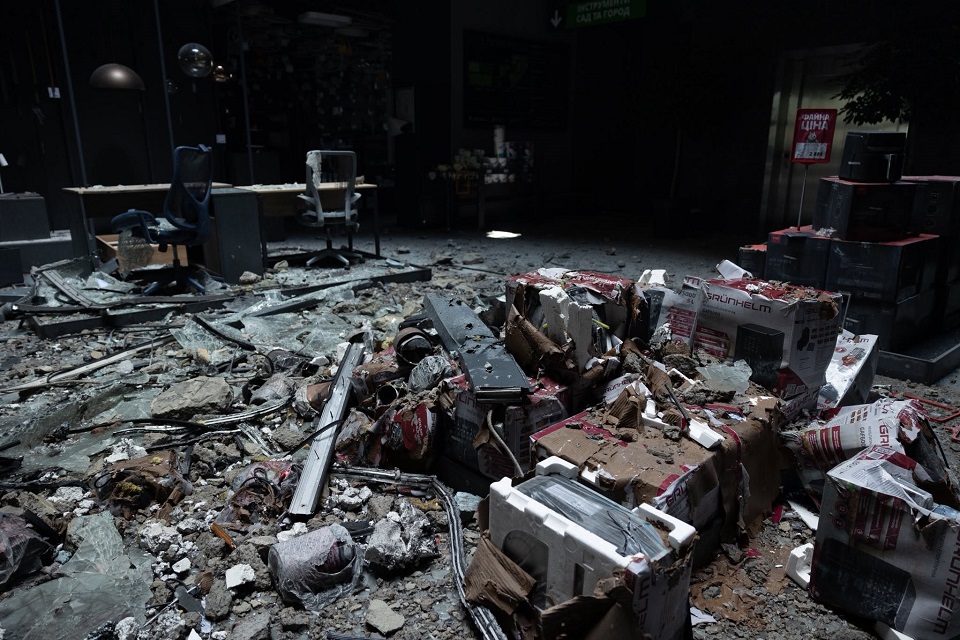
Businesses Damaged by Russian Shelling Can Now Access Loans at 0.1% Interest Rate
The Ukrainian government has announced the launch of a groundbreaking financial support program designed to help businesses rebuild and recover from the devastating effects of Russian military attacks. Under this new initiative, enterprises that have suffered damage from shelling, missile strikes, and drone attacks will be eligible to receive preferential loans at an extraordinarily low interest rate of just 0.1 percent. This measure represents one of the most significant government interventions aimed at supporting the war-affected business sector since the full-scale invasion began in February 2022.
The program comes at a critical time when thousands of Ukrainian businesses across the country have experienced partial or complete destruction of their facilities, equipment, and inventory. From manufacturing plants in Kharkiv to retail establishments in Kyiv and agricultural enterprises in southern regions, the economic toll of constant Russian bombardment has been immense. According to various estimates, direct damage to Ukrainian business infrastructure has reached tens of billions of dollars, with small and medium-sized enterprises bearing a disproportionate share of the burden.
The near-zero interest rate structure of the new lending program is specifically designed to remove financial barriers that have prevented many entrepreneurs from rebuilding. Traditional commercial loans in Ukraine currently carry interest rates that can exceed 20 percent annually, making recovery financing prohibitively expensive for businesses already struggling with lost revenue and destroyed assets. By offering credit at 0.1 percent, the government effectively provides what amounts to interest-free financing, with the nominal rate serving primarily administrative purposes.
To qualify for these preferential loans, businesses will need to provide documentation proving that their damage was directly caused by Russian military aggression. This includes evidence such as damage assessment reports, photographs, official statements from local authorities, and insurance documentation where applicable. The verification process aims to ensure that funds reach legitimate victims while preventing potential abuse of the program. Regional development offices and local chambers of commerce are expected to assist entrepreneurs in navigating the application process.
The initiative builds upon previous government efforts to support the wartime economy, including tax holidays for affected businesses, simplified regulatory procedures, and various grant programs funded by international donors. Ukraine’s partners, including the European Union, United States, and international financial institutions such as the World Bank and European Bank for Reconstruction and Development, have contributed significantly to these recovery efforts. The new loan program may also receive backing from international sources, though specific funding arrangements have not been fully disclosed.
Economic analysts have welcomed the program as a necessary step toward maintaining Ukraine’s economic resilience during the ongoing conflict. The business sector plays a crucial role not only in providing employment and generating tax revenue but also in maintaining some semblance of normal life for civilians in affected areas. When local shops, restaurants, and service providers reopen after attacks, it sends a powerful message of resistance and continuity. Furthermore, functioning businesses are essential for supporting the military effort through production of necessary goods and provision of services.
Implementation of the program will require careful coordination between multiple government agencies, including the Ministry of Economy, the Ministry of Finance, and regional administrations. Banks participating in the program will likely receive government guarantees to offset the risk associated with lending in a war zone. The success of similar programs in the past, such as the affordable mortgage initiative and small business support schemes launched during the COVID-19 pandemic, provides a template for effective execution. As Ukraine continues to defend itself against Russian aggression while simultaneously rebuilding, programs like this demonstrate the government’s commitment to ensuring that the country’s economic foundations remain intact for the eventual post-war recovery period.