
Russian General’s Vast Property Empire in Poltava Remains Largely Unmanaged Despite Wartime Seizure Laws
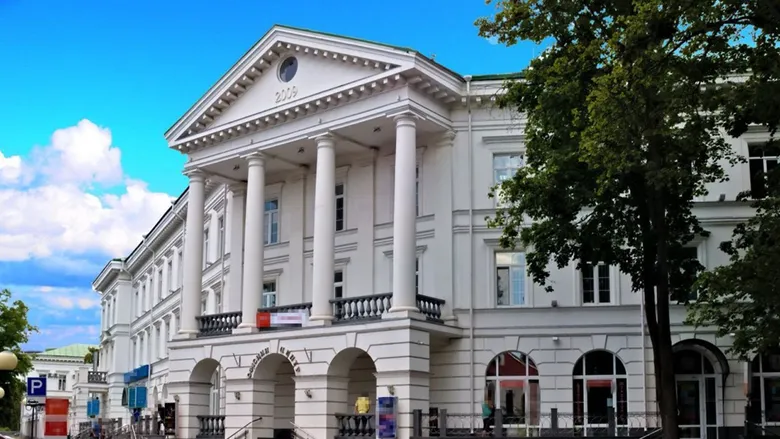
Ukrainian authorities in Poltava have identified an astonishing 53 residential and commercial properties belonging to a Russian Army colonel-general, yet the majority of these assets remain without proper state management more than three years into the full-scale invasion. The discovery highlights both the extensive reach of Russian military officials into Ukrainian real estate markets before the war and the ongoing challenges facing Ukrainian authorities in effectively managing seized enemy assets.
The properties, scattered throughout Poltava city and the surrounding region, represent a significant accumulation of wealth by a high-ranking Russian military officer in what was once considered a peaceful Ukrainian provincial center. Poltava, a historic city of approximately 280,000 residents located in central-eastern Ukraine, has deep historical significance — it was the site of the famous 1709 Battle of Poltava where Peter the Great’s Russian forces defeated Swedish King Charles XII, fundamentally reshaping European power dynamics.
The revelation raises serious questions about how a serving Russian general managed to acquire such extensive holdings in Ukrainian territory, particularly in the city center, without triggering security concerns prior to 2022. Real estate analysts suggest that such acquisitions were often conducted through intermediaries, shell companies, or Ukrainian citizens acting as nominal owners, making it difficult for authorities to trace the true beneficial owners. This practice was widespread among Russian oligarchs and military officials throughout the post-Soviet space, exploiting weak property registration systems and corruption in local governance structures.
Since Russia’s full-scale invasion began in February 2022, Ukraine has implemented legislation allowing for the seizure and management of assets belonging to Russian citizens, particularly those connected to the military and political establishment. The National Agency on Corruption Prevention (NACP) and the Asset Recovery and Management Agency (ARMA) were empowered to identify, freeze, and manage such properties. However, the bureaucratic complexities involved in transferring assets to state management have created significant backlogs, leaving many properties in legal limbo.
Legal experts point to several factors complicating the management process. Each property requires individual court proceedings to confirm ownership ties to sanctioned individuals, followed by separate procedures to appoint a state manager. With Ukrainian courts overwhelmed by war-related cases, civil litigation concerning property rights often faces significant delays. Additionally, some properties may have complex ownership structures involving multiple parties, requiring extensive investigation to untangle. The shortage of qualified asset managers willing to take on properties with unclear legal status further compounds the problem.
The case of the Russian general’s Poltava holdings is not unique. Across Ukraine, authorities have identified thousands of properties belonging to Russian officials, businesspeople with Kremlin ties, and collaborators. The State Property Fund of Ukraine has reported managing billions of hryvnias worth of seized assets, but acknowledges that full utilization of these resources remains a challenge. Some properties have been successfully converted to serve wartime needs — housing displaced persons, supporting military logistics, or generating rental income for state coffers — but many others sit vacant and deteriorating.
International partners have offered technical assistance in asset tracing and management, with the European Union and United States providing expertise developed through decades of combating organized crime and corruption. The Yermak-McFaul International Working Group on Russian Sanctions has specifically addressed the need for more efficient mechanisms to not only freeze but actively utilize seized Russian assets for Ukraine’s reconstruction. Some advocates argue that proceeds from these properties could fund local infrastructure repairs or support internally displaced persons, turning instruments of Russian influence into tools of Ukrainian resilience.
As Ukraine continues to fight for its survival, the unresolved status of enemy assets in cities like Poltava represents both a practical challenge and a symbolic one. Each property sitting without proper management is a missed opportunity — for generating revenue, housing those displaced by Russian aggression, or simply demonstrating that Ukraine can effectively reclaim what was taken through corruption and subterfuge. Authorities have indicated that streamlining the asset management process remains a priority, though tangible improvements may require additional legislative reforms and increased institutional capacity that are difficult to achieve during wartime conditions.